

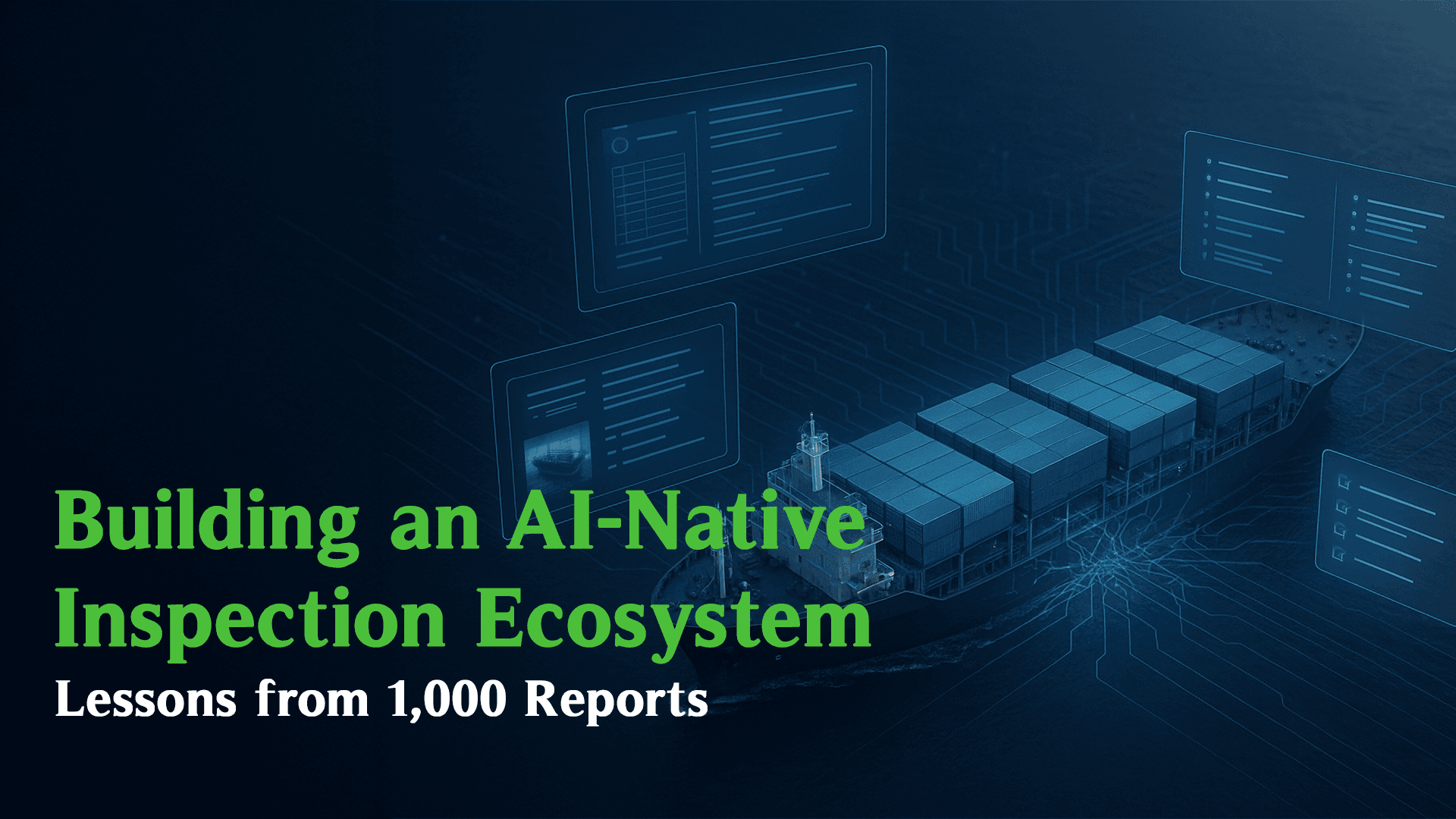
Before we built NAVIREGO's AI-native inspection system, I spent years as a surveyor.And like many in the field, I often found myself on the way to a ship with almost no preparation. A call the night before, a folder of outdated documents, and sometimes not even the right experience for the inspection type.
You'd step on board doing your best not to show uncertainty in front of the Crew. Then came the reporting: endless checklists, long narratives, attaching photos manually, rephrasing the same observations over and over because every company and every inspector had their own way of saying the same thing.
It was exhausting, inconsistent, and slow. Reports piled up, photos got misplaced, and by the time you finally submitted, weeks have passed and half the details were fading.
After reviewing over 1,000 inspection and audit reports, I realized that this inefficiency wasn't just about paperwork, it was about lost knowledge.Inside every report, hidden in PDFs, handwritten notes, and pictures, lies a story about safety performance, recurring deficiencies, and risks that nobody ever had time to analyze.
That's what pushed us to build an AI-native inspection ecosystem, a way to extract meaning from the data inspectors already produce, and turn it into something that drives improvement instead of paperwork.
Most surveyors know what it feels like to get thrown into an inspection at short notice. There's little time to prepare, no access to past findings, and you spend the first hours trying to figure out context instead of inspecting.
AI can change that. By structuring inspection data, NAVIREGO gives every surveyor instant access to past inspections, recurring issues, and relevant standards before even setting foot onboard.Preparation becomes data-driven, not memory-based.
Reporting is often where the inspection momentum dies.After a long day on board, you face the real battle: writing the report. You open plenty of checklists, hundreds of photos, and a Word template that looks more like a legal document than a technical summary. Nowadays, some teams use digital platforms. Even there, the process often means manually re-entering the same data, following rigid workflows, and spending hours clicking through forms instead of focusing on what really matters: the inspection itself.
Inconsistency creeps in. One inspector writes "corrosion on flange," another says "surface pitting on valve," another "minor rust observed." The meaning is the same, but the data is useless because it's fragmented.
NAVIREGO's NLP models fix this by reading and structuring inspection text the way a human would, only faster. They understand context, identify risks, and tag every remark under a consistent taxonomy.
Meanwhile, vision models analyze photos for an automatic categorization and to detect equipment type, deficiency patterns, or condition levels automatically.The result: reports that write themselves from your evidence, leaving the inspector to focus on assessment, not formatting.
One of the biggest inefficiencies I experienced wasn't the inspection itself... it was what happened after.Reports were submitted, reviewed, corrected, and judged, but the feedback rarely reached the person who wrote them. As a surveyor, you rarely knew what you did wrong or how to improve.
NAVIREGO's inspection ecosystem closes that loop. Each report becomes part of a shared learning database, allowing managers and surveyors to review patterns, compare performance, and learn from each other's work.
Continuous improvement finally becomes continuous.
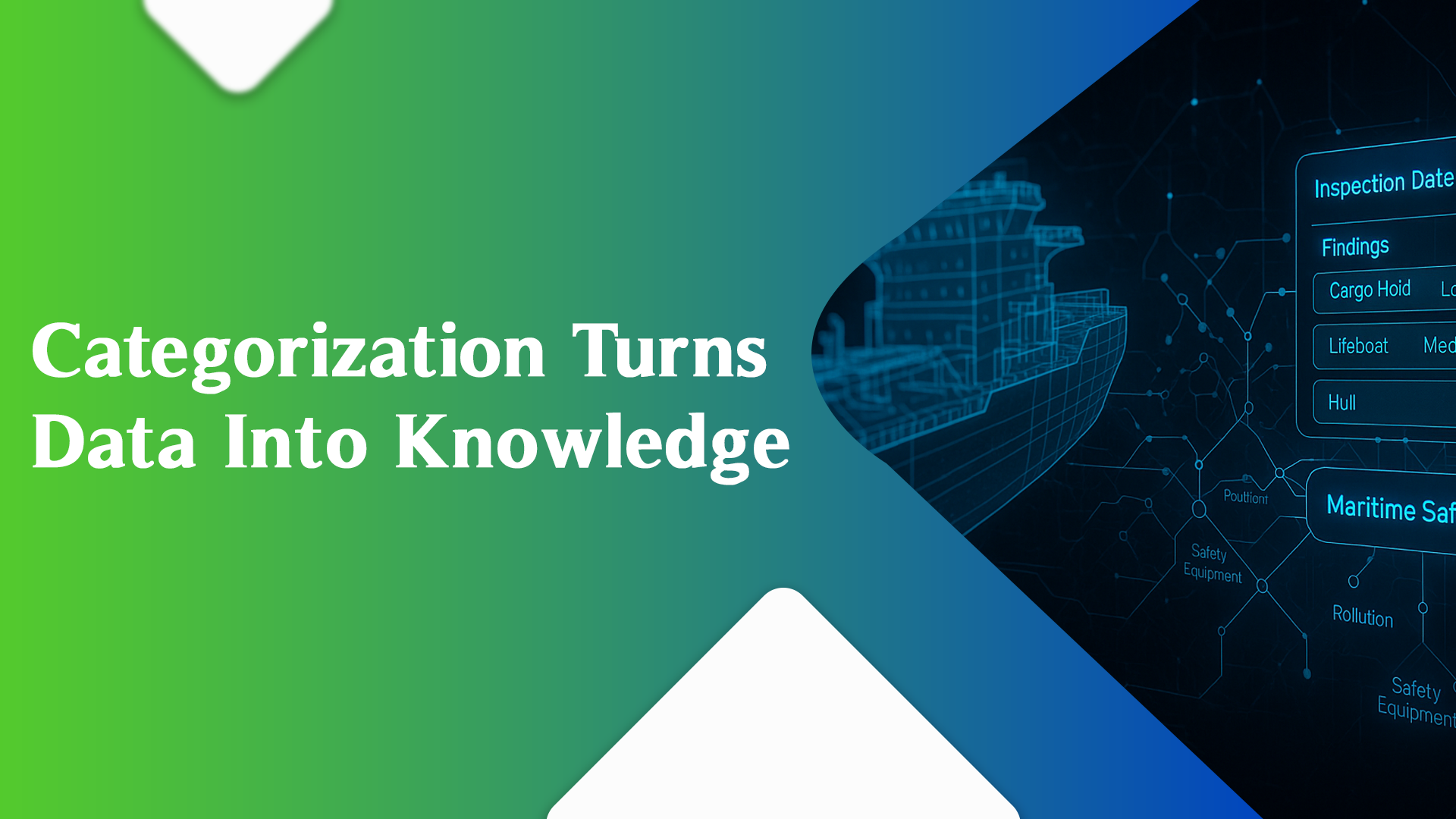
After AI extracts and structures information, categorization becomes the backbone of understanding.NAVIREGO groups every finding by risk area, location, frequency, and recurrence, creating a searchable, living knowledge graph of operational risk.
Why it matters:
It detects recurring deficiencies before they become systemic.
It connects technical issues to root causes like training or
supplier quality.
It allows QHSE teams to focus on what truly drives safety
performance.
This is what turns inspections from a box-ticking exercise into an engine for organizational learning.
Today, AI helps us understand what happened. Tomorrow, it will tell us what's likely to happen next.
By connecting inspection insights with operational data --- like voyage routes, equipment age, or maintenance logs --- NAVIREGO's models will evolve toward predictive compliance.That means forecasting which vessels are at higher risk of certain deficiencies, flagging weak areas before audits, and recommending preventive actions with data-backed confidence.
For DPAs, superintendents, and safety officers, this is a shift from firefighting to foresight.Instead of reacting to non-conformities, teams can prevent them.
When inspections rely on manual reporting, inefficiency compounds silently:
Reports accumulate and get delayed, increasing the chance of
forgotten details.
Managers lose insight because findings are never consolidated.
Audits become more reactive, less strategic.
The organization loses the opportunity to learn from its own data.
AI-native systems don't just automate reporting, they give back the time and clarity that inspectors and QHSE managers have lost to bureaucracy.
The future of maritime inspections isn't just digital, it's intelligent.By combining Natural Language Processing, Vision AI, and structured categorization, NAVIREGO turns every report, photo, and checklist into a predictive safety intelligence engine.
For me, this journey started from the field: from those rushed, unprepared days onboard and the nights spent writing reports alone.Now, we're closing that loop: transforming inspections from isolated events into a connected system that learns from every observation.
DPAs, surveyors, and QHSE leaders can finally move beyond reactive auditing and into continuous improvement knowing that every detail they record is part of something bigger.
Ready to transform your inspection workflow?
[Explore how NAVIREGO] (https://www.navirego.com/contact) AI-native Inspection Ecosystem helps your team convert inspection reports into real-time insights, performance feedback, and predictive safety intelligence.
1. What does "AI-native inspection ecosystem" mean? It's a digital workflow where inspection text, photos, and checklists are analyzed automatically using AI, designed from the ground up to extract insights, not just store files.
2. How does NLP help? NLP reads inspection notes, identifies risks, and standardizes findings automatically, converting unstructured text into searchable, comparable data.
3. What does Vision AI add? It analyzes photos from inspection reports to detect deficiencies like corrosion, leaks, or missing signage, giving a visual dimension to data.
4. Why is categorization important? It brings structure and consistency, enabling risk trending, root-cause analysis, and predictive modeling.
5. What is predictive compliance? Predictive compliance uses AI insights to anticipate future risks, allowing maritime operators to act early, prevent repeat findings, and maintain continuous readiness.
Feb 07, 2025 by Vivek Narain
Discover how AI in maritime is revolutionizing the shipping industry, enhancing efficiency, driving sustainability, and preparing businesses for the future.
Feb 20, 2025 by Vivek Narain
Explore AI's role in maritime—predictive maintenance, route optimization, autonomous vessels, and energy management—driving efficiency, safety, and sustainability.
Mar 10, 2025 by Vivek Narain
Improve your vessel’s CII rating by increasing deadweight capacity. A cost-effective, practical approach for shipowners to enhance fuel efficiency and compliance.
Mar 17, 2025 by Vivek Narain
Ensure your fleet complies with the new IP Code by July 2024. Learn key retrofitting steps, safety upgrades, and compliance solutions in this practical guide.
Mar 23, 2025 by Vivek Narain
Discover how AI and GenAI are revolutionizing maritime operations, enhancing efficiency, compliance, and decision-making for a smarter shipping industry.
Apr 02, 2025 by Vivek Narain
Explore AI regulations across the EU, U.S., and China. Learn about compliance, risk frameworks, and business impact in this comparative analysis.
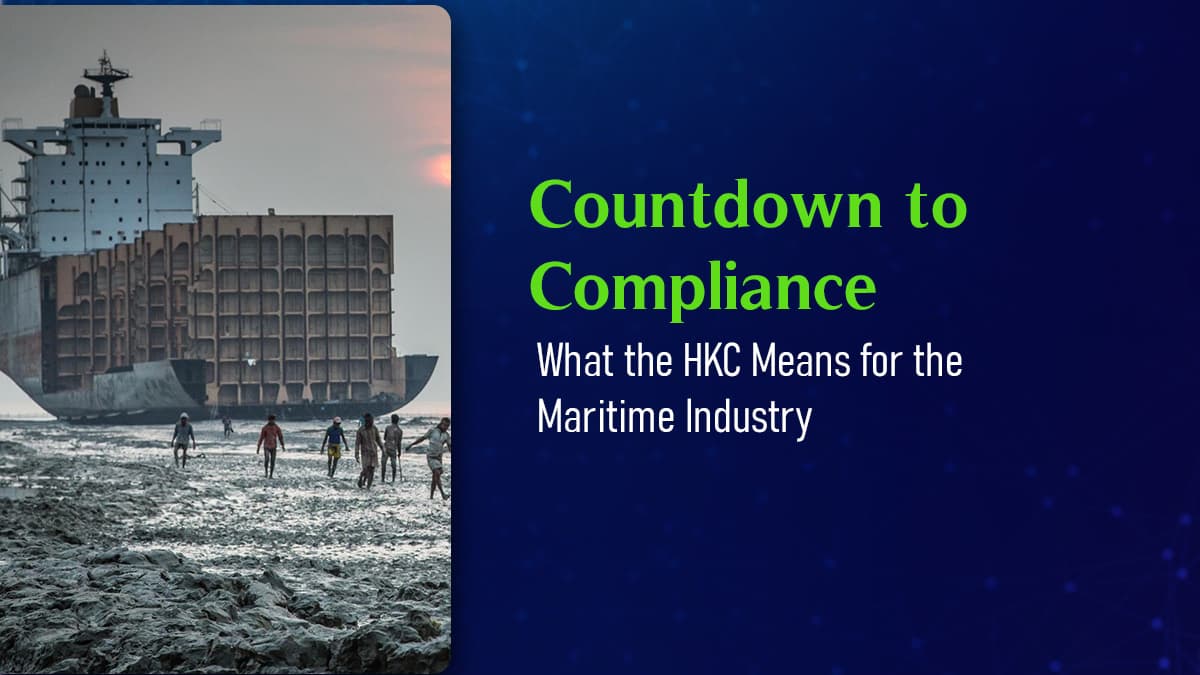
Jun 03, 2025 by Vivek Narain
Ensure HKC ship recycling compliance by June 2025. Learn key rules, IHM certification, and how to align with EU SRR and authorized recycling facilities.
Jun 10, 2025 by Vivek Narain
Analyze 2024 Port State Control (PSC) reports across USCG, Paris, Tokyo, India, and Black Sea MOUs. Get data on detentions, top deficiencies, ship types, and compliance risks.
Jun 17, 2025 by Dario Barbaro
Explore how AI agents and agentic workflows differ, with real-world examples from shipping and offshore sectors. Learn their benefits, risks, and future potential.
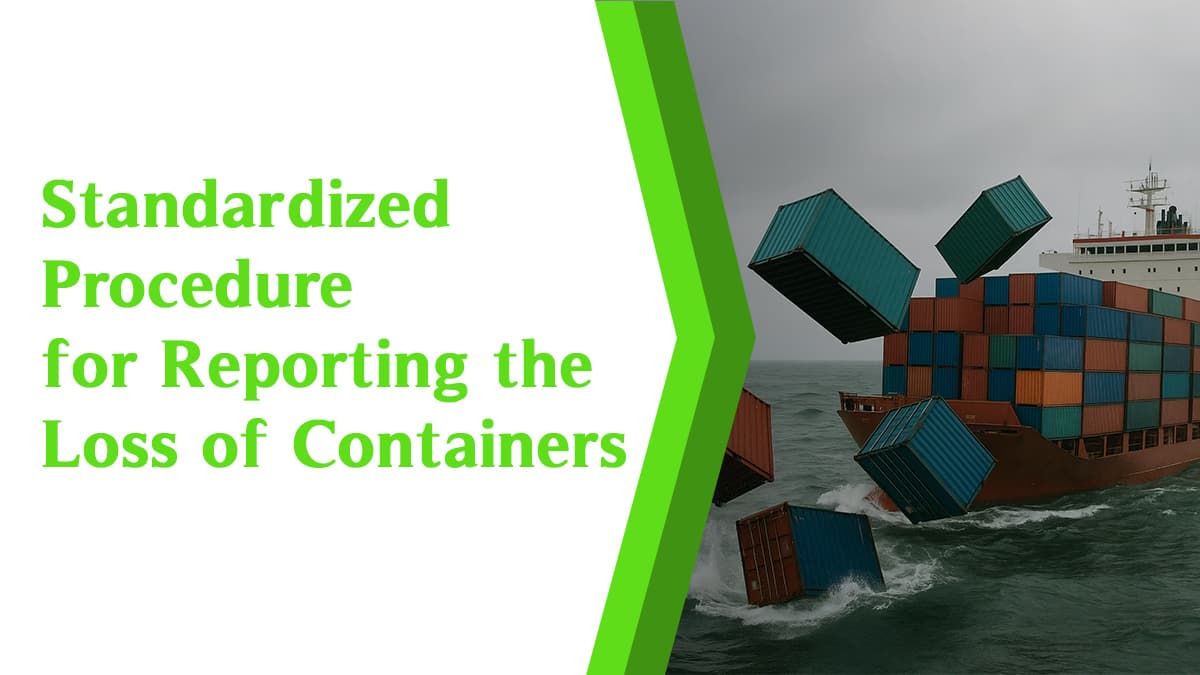
Jul 30, 2025 by Dario Barbaro
IMO RESOLUTION MSC.550(108) introduces mandatory, standardized reporting for containers lost at sea. Learn what it means for maritime compliance and safety.
Aug 06, 2025 by Dario Barbaro
Many maritime teams fall into the 80% trap, pushing AI toward full automation. Discover how Navirego’s augmented AI in maritime empowers professionals without replacing them.
Aug 18, 2025 by Dario Barbaro
Learn how to use Gen AI in high-stakes maritime operations without compromising safety, accuracy, or control. NAVIREGO shows the way.
Aug 27, 2025 by Dario Barbaro
Maritime safety AI can help prevent future incidents by ensuring safety lessons turn into real-time updates and action. Learn how NAVIREGO is driving change.
Sept 08, 2025 by Dario Barbaro
IMO’s 2025 rules limit remote surveys, ISM audits, and ISPS checks. See how NAVIREGO helps fleets stay compliant in a hybrid compliance era.
Sept 09, 2025 by Dario Barbaro
IMO is adding VDES to SOLAS to counter AIS spoofing and improve secure ship-to-shore communication. Learn what this means for shipowners with NAVIREGO.
Sept 11, 2025 by Dario Barbaro
Generative AI in maritime works best with a vertical focus. See how NAVIREGO delivers domain-specific AI for HSQE, compliance, and operations.

Sept 22, 2025 by Dario Barbaro
Did you know LLMs like ChatGPT struggle with numbers? Learn why this matters for data-heavy maritime tasks and how NAVIREGO ensures precision.
Oct 25, 2025 by Dario Barbaro
Discover how AI-assisted regulatory search helps DPAs track rule changes, reduce manual checks, and stay audit-ready with NAVIREGO’s Standard Library.
Dec 30, 2025 by Dario Barbaro
Explore how maritime environmental regulations are evolving by 2026 and how technology and AI are reshaping compliance, inspections, and regulatory readiness.
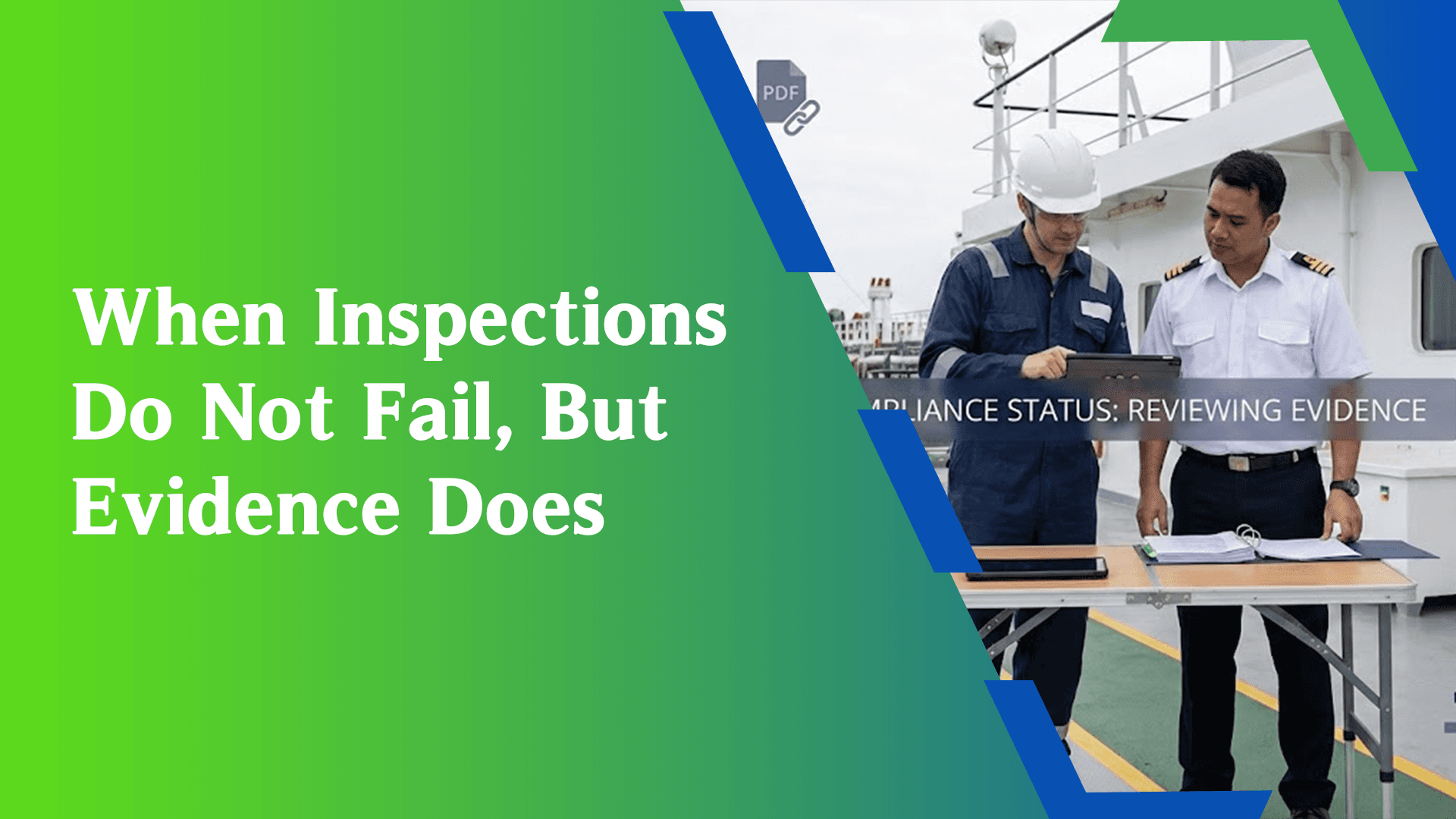
Jan 20, 2026 by Dario Barbaro
A ship inspection report fails when evidence is fragmented. Learn why modern operators must rethink inspection reporting for audits, chartering, and asset decisions.
Feb 23, 2026 by Dario Barbaro
Port State Control inspection trends for 2025—top detention drivers, PSC inspection report risks, and practical steps to avoid failures in 2026 readiness.
Mar 2, 2026 by Dario Barbaro
Explore how international maritime law and regional maritime laws and regulations differ in 2025/2026 across the EU, US, and Asia-Pacific.
May 7, 2026 by Dario Barbaro
** Explore PARIS MoU 2025 data on ship deficiencies and detention risks. Identify high-risk defects, trends, and strategies to avoid PSC detention.

REGD ADDRESS: MR-1, 5th Floor, WIng-A, AltF Statesman House, 148, Barakhamba Road,
Connaught Place, New Delhi - 110001
ADDRESS: Pawla Ponke 84-207 Bojano, Poland
TELEPHONE: +91 835 692 3342
EMAIL: info@navirego.com
About Us
Cognitive Hub
Terms & Conditions
Privacy policy


Home
Industries
Products
Case Studies
NEWSLETTER
Subscribe to our newsletter for regular updates and insights.